

Here at the Bristol Dental Practice, we have many years of experience carrying out successful root canal treatments. During this time, we’ve learned how important it is to place your trust – and your health – in the right hands.
So, if you need to see an endodontist, how can you know you’re choosing well?
Here’s what to ask an endodontist before booking…
How can I tell if a root canal is the right treatment for me?
First of all, how can you know if you need a root canal? Sometimes a filling or crown may be enough, but if the nerve is infected or damaged, endodontics is a good treatment solution. Carried out in time, it allows us to save your natural tooth and avoids the need for an extraction. If you have an infection, it may not be painful during the early stages, so it’s important to look out for other signs. A change in tooth colour or increased sensitivity can both point to a problem. If your case is more severe, a dentist will help you decide whether a root canal or tooth removal is the right solution.
How quickly can I get an endodontic appointment?
In cases of infection or discomfort, fast action makes a world of difference. If your tooth is painful or shows signs of infection, do ask if it’s possible to see an endodontist urgently. For NHS treatment, there’s often a lengthy waiting list, but at the Bristol Dental Practice, we’re usually able to book same-day or next-day appointments to have you seen more quickly.
What happens if I don’t get a root canal?
Left untreated, it’s likely the infection in your tooth will spread. This leads to pain, swelling, and often tooth loss. Early treatment always gives the best outcome, so make it a priority to look for help.
What happens during a root canal?
Knowing what to expect can make the treatment process feel far smoother. During root canal treatment, an endodontist will clear infected tissue from the tooth, disinfect the canals, and seal them to guard against future infection. Most root canals take between 60 and 90 minutes, depending on the tooth and the complexity of the case. If you’re speaking with an endodontist or treatment coordinator, they should be able to walk you through the procedure and answer any questions you have.
Do you use digital X-rays or 3D imaging?
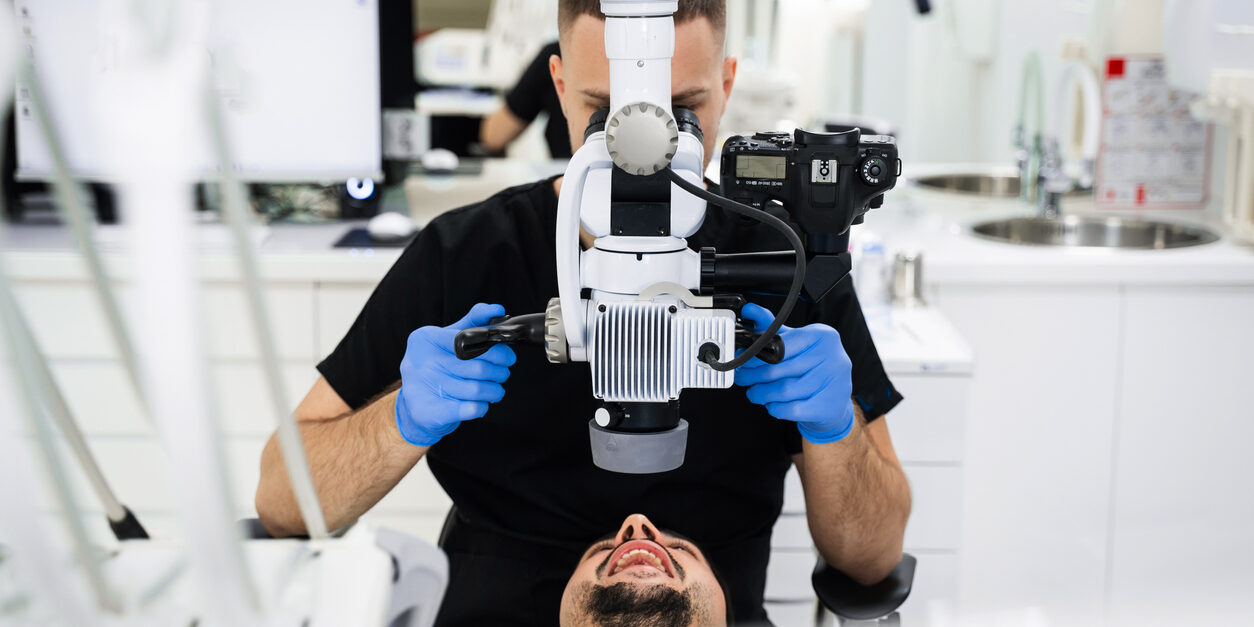
Modern tools and technologies can drastically improve accuracy and success rates for dental patients. So, if you’re researching Bristol-based endodontists, look for practices that use dental microscopes, digital X-rays, rotary instruments, or 3D CBCT scanning. These will all help to promote a better outcome for you in the longer term.
What training or certifications should an endodontist have?
Endodontics is a dental specialism, so it’s best carried out by an experienced practitioner: someone who is registered as a specialist and carries out root canal treatment on a regular basis. For instance, our in-house Endodontist, Dr Adrian Jones, has an MSc in Endodontics and has been accepting referrals for root canal treatments since 2007. This means he can confidently support patients from their initial assessment right through to surgery, and is also able to help with complex cases.
Is a root canal painful?
Thanks to modern techniques and effective local anaesthetic, root canal treatment can now be delivered painlessly. But, if you’re nervous about the procedure, you might also like to ask…
Do you offer sedation?
Not all dental practices offer sedation, so it’s good to enquire up-front if this will make a big difference to how comfortable you feel. Availability depends on whether the practice has team members trained and qualified in delivering conscious sedation. In our experience, sedation can be a valuable tool in tackling dental phobia or anxiety and reaching the final goal of improved oral health.
Do you offer payment plans?
If cost is a concern but you don’t want to wait for the NHS, one option is to seek out a dental practice offering payment plans. This means that you can receive the treatment you need before things get any worse. Here, we offer 0% finance on all of our private treatments – making it much easier for our patients to get help.
What can patient reviews and recommendations tell me?
Reading about others’ experiences is often the best way of gauging what a practice is really like. This is where some background research pays dividends. Check Google reviews and case studies, look at testimonials, and tune into the chatter around a practice’s local reputation (for instance, on social media). This can all help you feel confident you’re choosing a trusted specialist.
Where is your practice located? Is it easy to reach from central Bristol?
If life is busy, it’s best to find a practice conveniently nearby. Our practice is based in a large Georgian townhouse in the heart of the city centre, meaning transport links are good and our patients can easily visit.
Do you accept referrals or can I self-refer?
At some clinics, referrals for treatment can only be made by another dentist, while others welcome self-referrals. If you’d like to self-refer, do check with the practice before trying to book. At the Bristol Dental Practice, we’re very happy to receive self-referrals as well as dentist referrals.
Choosing with confidence
Selecting the right endodontist is a big decision, and taking time to ask the right questions can make all the difference to your comfort, confidence, and long-term oral health. Whether you’re comparing treatment options or weighing up different specialists in Bristol, make sure you feel fully informed and genuinely supported. Above all, don’t be afraid to reach out to a practice with any questions. The right endodontist will always be happy to guide you – and when you find the team that feels like a good fit, you’ll know your smile is in safe hands.